1450 Debbie Ln #130, Arlington, TX 76002


When patients come to South Arlington Smiles with a chipped, stained, or weakened tooth, one question comes up often: crowns vs. veneers — which does your tooth actually need in Arlington? Both restorations can transform a smile. But they serve very different clinical purposes. Choosing the wrong one can mean unnecessary tooth removal or a restoration that fails too soon. Understanding the difference helps you make a confident, informed decision with Dr. Talon Davis.
What Is a Dental Crown — And When Does Your Tooth Need One?
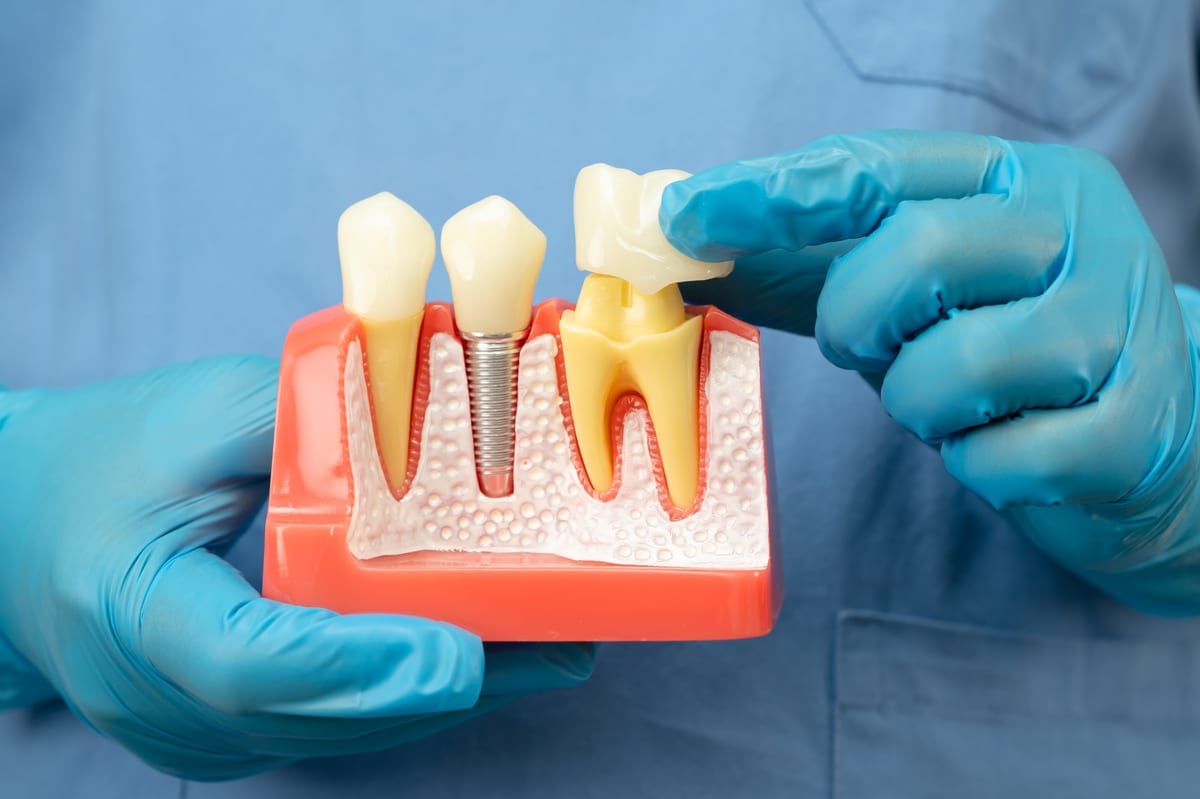
A dental crown is a full-coverage cap that surrounds the entire visible portion of a tooth. It protects the tooth from every angle. Dentists recommend crowns when a tooth has significant structural damage that a partial restoration cannot reliably fix.
Common clinical reasons a crown is the right choice include:
- A large cavity that removes too much healthy tooth structure
- A cracked tooth that reaches toward the gum line
- A tooth weakened after root canal treatment
- A broken cusp that leaves the tooth unstable
- Placement over a dental implant post
Crowns require removing enamel from all sides of the tooth. That preparation is irreversible. However, when a tooth truly needs full protection, a crown is not just cosmetic — it is structurally necessary. Our metal-free crowns at South Arlington Smiles blend seamlessly with natural teeth while delivering lasting strength.
What Is a Veneer — And When Does It Make More Clinical Sense?
A veneer is a thin porcelain shell bonded to the front surface of a tooth only. It does not wrap around the entire tooth. Veneers work best when the underlying tooth structure is still healthy and largely intact.
Dr. Davis typically recommends veneers for patients dealing with:
- Permanent staining that whitening cannot correct
- Minor chips or small fractures on front teeth
- Slight size or shape irregularities affecting appearance
- Mild spacing issues between front teeth
- Teeth that are slightly worn but still structurally sound
Because veneers only cover the front surface, they remove far less tooth structure than a crown. That makes them a more conservative option when the tooth is fundamentally healthy. They are a popular part of Cosmetic Dentistry Arlington plans for patients who want smile improvements without aggressive preparation.
Crowns vs. Veneers: How Dr. Davis Thinks About the Choice in Arlington
The decision between crowns and veneers is never purely cosmetic. Dr. Davis evaluates several clinical factors before recommending either option. The goal is always to preserve as much healthy tooth structure as possible while providing the protection the tooth genuinely needs.
Here is how the clinical reasoning typically works:
Tooth structure remaining: If more than 50% of the tooth is damaged or missing, a veneer will not hold reliably. A crown becomes necessary to restore function and prevent further breakdown.
Location of the tooth: Molars absorb heavy chewing forces. A veneer on a back tooth would likely fracture under that pressure. Crowns are almost always the right choice for molars. Front teeth, which face lighter forces, are better candidates for veneers when structure allows.
Bite and jaw alignment: Patients with bruxism — nighttime tooth grinding — put extreme stress on restorations. Veneers are more vulnerable to cracking under that force. Crowns offer greater durability for these patients.
Gum health and existing decay: Active decay must be fully removed before any restoration. If decay is extensive, the remaining tooth may not support a veneer bond. A crown provides the stability needed in those situations.
Can a Tooth Need Both — Or Neither?
Sometimes patients assume they need a crown or veneer when a simpler solution exists. A small chip might only need cosmetic bonding. A mildly discolored tooth might respond well to professional whitening as part of a Preventive Dentistry Arlington plan.
On the other hand, a patient planning veneers on several teeth may discover that one tooth is too damaged to support one. That particular tooth may need a crown while the others receive veneers. A mixed approach is common and completely appropriate when each tooth is evaluated individually.
The important point is this: the treatment should match the condition of the tooth — not the other way around. No patient should receive a crown just because it is a more expensive or impressive-sounding option. And no patient should receive a veneer on a compromised tooth just to avoid more extensive preparation.
What to Expect During Your Consultation at South Arlington Smiles
During your evaluation, Dr. Davis will examine the tooth with X-rays and a thorough clinical assessment. He will measure how much healthy structure remains. He will also check your bite, review your dental history, and ask about habits like grinding or clenching.
After that examination, he will explain exactly why a crown or veneer is recommended for your specific situation. You will never receive a vague answer. The clinical reasoning behind every recommendation is shared clearly so you can feel confident moving forward.
Arlington patients deserve restorations that last — and that starts with choosing the right one from the beginning. Whether you need a durable metal-free crown or a conservative porcelain veneer, our team will match the solution to your actual tooth.
Conclusion
Understanding crowns vs. veneers — and which your tooth actually needs in Arlington — is about more than aesthetics. It is about protecting your long-term oral health with the right clinical solution. Dr. Talon Davis and the South Arlington Smiles team are here to walk you through every option with honesty and care. Book Now to schedule your appointment with our team.
Frequently Asked Questions
Is a crown more painful to get than a veneer?
Neither procedure should be painful during treatment. Both are performed with local anesthesia to keep you comfortable. Some patients experience mild sensitivity afterward, but this typically resolves within a few days. Dr. Davis will discuss what to expect before any procedure begins.
How long do crowns and veneers last?
With proper care, dental crowns typically last 10 to 15 years or longer. Porcelain veneers generally last 10 to 12 years. Good oral hygiene, regular checkups, and avoiding habits like grinding extend the lifespan of both restorations significantly.
Can a veneer be placed over a tooth that already has a filling?
It depends on the size and location of the filling. Small fillings on the back of a front tooth may not interfere with veneer bonding. However, large fillings can reduce the bonding surface and compromise the veneer’s stability. Dr. Davis will assess this during your consultation.
What happens if I choose a veneer but my tooth actually needed a crown?
A veneer placed on a structurally compromised tooth may crack, debond, or fail prematurely. This can leave the tooth in worse condition than before. That is why a thorough clinical evaluation before treatment is so important — it prevents costly and uncomfortable problems later.
Are metal-free crowns as strong as traditional metal crowns?
Modern metal-free crowns made from materials like zirconia or lithium disilicate are extremely durable. They are strong enough for back teeth in most patients. They also match the natural color of your teeth, which makes them a preferred option for both function and appearance at South Arlington Smiles.