1450 Debbie Ln #130, Arlington, TX 76002


Many Arlington patients don’t realize their jawbone is actively shrinking after tooth loss. The longer you wait, the more bone you lose — and the more complex your treatment becomes. Understanding why waiting on implants gets costlier in Arlington can motivate you to act before the problem worsens. Dr. Talon Davis at South Arlington Smiles helps patients recognize the warning signs early, when options are still straightforward and affordable.
What Happens to Your Jawbone After Tooth Loss
Your jawbone stays strong because tooth roots stimulate it every time you bite or chew. When a tooth is lost, that stimulation stops immediately. The bone beneath the gap begins to resorb, or dissolve, within weeks. This process is called bone resorption, and it never pauses on its own.
Within the first year of tooth loss, you can lose up to 25% of bone volume in that area. Over the next few years, the loss continues and accelerates. This is why patients who wait two or three years often need bone grafting before implants become possible. Bone grafting adds cost, time, and additional recovery to your treatment plan.
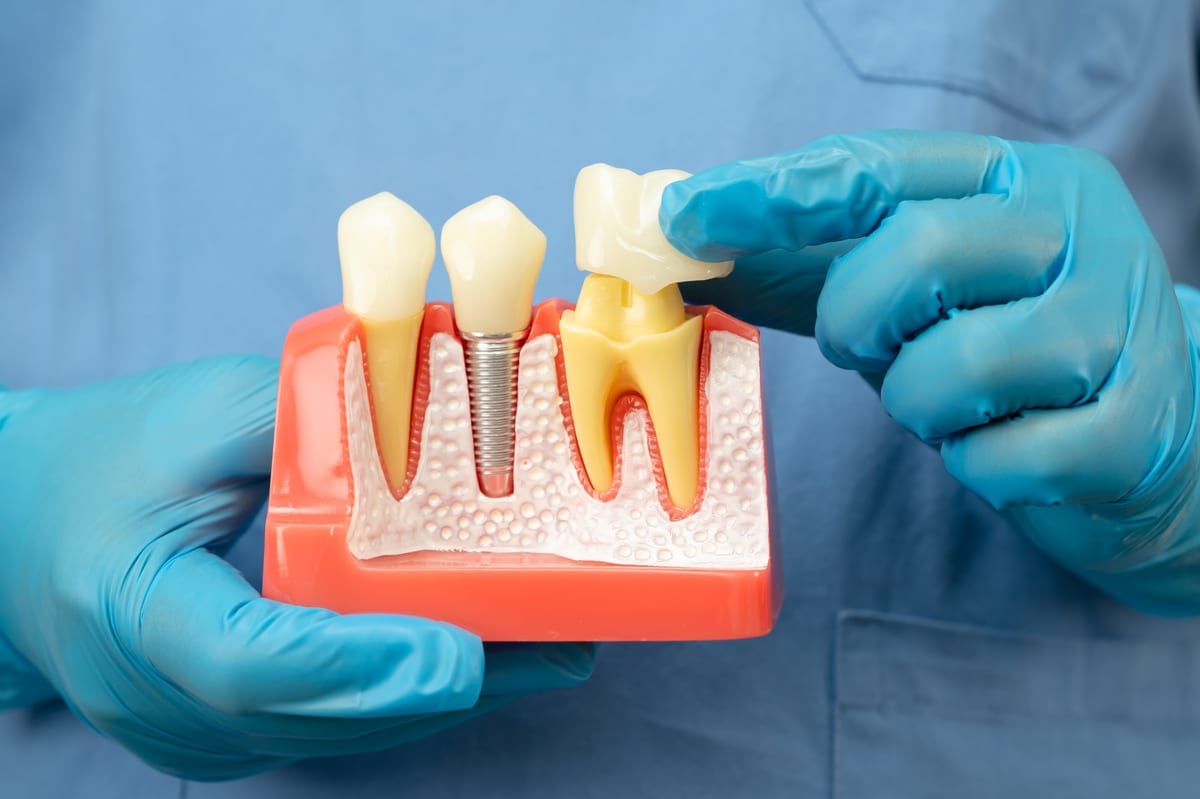
Dental implants work by replacing the tooth root with a titanium post. That post restores the stimulation your jawbone needs to stay dense. No other tooth replacement option — not bridges, not dentures — does this. Only implants can halt and reverse bone loss in that region.
Warning Signs You Have Already Waited Too Long in Arlington
Many patients come to South Arlington Smiles unsure whether implants are still an option for them. Certain warning signs suggest that bone loss is already underway. Recognizing these signs early gives Dr. Davis the best chance to intervene effectively.
Watch for these key warning signs:
- Shifting or drifting teeth — nearby teeth tilt into the empty space as bone support weakens
- Difficulty chewing — you favor one side or avoid certain foods due to instability
- A sunken facial appearance — your cheeks or jaw look hollow or collapsed in that area
- Loose-fitting dentures — the ridge that supports your denture has shrunk significantly
- Jawbone pain or tenderness — the bone is under stress from shifting bite forces
- Gum recession near a gap — the tissue has pulled back as the bone beneath it receded
If you recognize one or more of these signs, do not delay your consultation. Waiting another six months will only compound the problem. A quick evaluation with Dr. Davis can clarify exactly where your bone health stands today.
How Shifting Teeth and Chewing Problems Connect to Bone Loss
Shifting teeth are one of the clearest visible signals of advancing bone loss. When a gap exists, neighboring teeth lose lateral support. They gradually lean inward toward the space. This misalignment affects your entire bite over time.
A misaligned bite creates uneven pressure across your remaining teeth. Some teeth bear far more force than they should. That excess pressure accelerates wear, cracking, and even additional tooth loss. What started as one missing tooth can become a much larger problem quickly.
Difficulty chewing is equally telling. Patients often describe avoiding hard foods like raw vegetables, nuts, or crusty bread. They unconsciously chew on one side to compensate for an unstable area. This habit strains the jaw joint and the muscles on that side.
Consistent Preventive Dentistry Arlington visits allow Dr. Davis to catch these shifts early. Regular checkups include bite assessments that reveal subtle changes before they become expensive problems. Prevention is always less costly than correction.
Why Acting Now Costs Less Than Waiting in Arlington
The financial reality of delayed implant treatment surprises many patients. They assume waiting saves money. In fact, the opposite is true. Here is why acting promptly is the more economical choice:
- No bone graft needed — placing implants while adequate bone remains eliminates a separate surgical procedure
- Fewer teeth affected — stopping bone loss early prevents neighboring teeth from shifting and requiring additional treatment
- Simpler implant placement — denser bone means a more straightforward procedure with faster healing
- Protecting adjacent restorations — nearby crowns, bridges, or fillings remain stable when bite forces stay even
- Less time away from work — simpler procedures mean shorter recovery and fewer appointments overall
Bone grafting, when required, adds a healing period of several months before implants can even be placed. That means the total treatment timeline stretches from weeks to nearly a year. For busy Arlington residents, time is a real cost too.
Patients who explored Cosmetic Dentistry Arlington options after significant bone loss often discover their choices are more limited than they expected. Restoring a smile is far easier when underlying bone structure is still intact. Acting at the first sign of trouble preserves both your options and your budget.
What Dr. Talon Davis Recommends for Arlington Patients
Dr. Davis follows a straightforward recommendation: do not wait more than three to six months after tooth loss to discuss implants. Every additional month allows bone resorption to progress. Early evaluation does not commit you to immediate surgery — it simply preserves your options.
At South Arlington Smiles, the evaluation process is thorough and low-pressure. Dr. Davis uses digital imaging to assess your current bone density. He explains exactly what stage of bone loss, if any, is present. Then he outlines a realistic treatment path based on your specific situation.
Implant treatment at South Arlington Smiles is designed to feel manageable, not overwhelming. The team walks you through every step from consultation to final restoration. Patients consistently report that the process was far less intimidating than they feared. The goal is always to help you make an informed, confident decision.
Conclusion: Your Bone Health Cannot Wait
Bone loss from missing teeth is a silent process that moves faster than most patients expect. The warning signs — shifting teeth, chewing difficulty, a changing facial profile — indicate that the problem is already progressing. Acting quickly in Arlington means simpler treatment, lower total costs, and a stronger foundation for your implant. Dr. Talon Davis and the South Arlington Smiles team are ready to help you understand exactly where you stand and what steps make sense for your smile. Book Now to schedule your appointment with our team.
Frequently Asked Questions
How quickly does jawbone loss begin after a tooth is extracted?
Bone resorption begins within the first few weeks after tooth extraction. In the first year alone, you can lose up to 25% of the bone volume in that area. This is why early evaluation for dental implants is so important for preserving your treatment options.
Can bone loss from missing teeth be reversed without implants?
Bone loss cannot be reversed on its own. Only a dental implant — which replaces the tooth root — can restore the stimulation that keeps jawbone dense. Bridges and dentures sit on top of the gum line and do not prevent or reverse bone resorption beneath the surface.
What is bone grafting and when is it needed before implants?
Bone grafting is a surgical procedure that adds donor bone material to an area where resorption has occurred. It is needed when the existing bone is too thin or shallow to safely anchor an implant. Grafting adds both cost and several months of healing time to your overall treatment plan.
How does Dr. Davis determine if I still have enough bone for implants?
Dr. Talon Davis uses digital X-rays and cone beam imaging to assess your bone density and volume. These images give a precise three-dimensional picture of your jaw structure. Based on those results, he can determine whether implants can be placed directly or whether bone grafting is needed first.
Are dental implants at South Arlington Smiles suitable for patients of all ages in Arlington?
Dental implants are generally recommended for adults whose jawbones have finished developing, typically in their late teens or early twenties. There is no upper age limit. Dr. Davis evaluates each patient individually to confirm that overall bone health and general health support a successful implant outcome.